Stop building people around the work. Start building the work around the people.
Lee Malveaux helps leadership teams get laser focused on the mission, unlock the value within their people, and execute their highest priorities to maximize growth.
Mission-Critical Performance Blueprint
Five layers inspected. One governing finding. A prescribed path. Illustrative sample.
“Execution is not the problem. The team never agreed on what the year is for.”
ORGANIZATIONS SERVED
EXECUTIVE LEADERS DEVELOPED
EMPLOYEES REACHED
CUSTOMERS SERVED BY CLIENT BASES
LEADERS WE HAVE SERVED AT
Everyone is working harder. Growth is not moving.
The symptoms show up in different rooms. The cause is the same one.
- IAsk five of your leaders what matters most this year and you get five answers. All sincere. None aligned.
- IIYour best people are buried in work anyone could do, and their numbers still look fine, so nobody catches it.
- IIIDecisions get made in the meeting and remade in the hallway.
- IVThe AI tools arrived before anyone decided what stays human.
- VInitiatives stall at eighty percent and delivery depends on heroics.
Leaders treat it as an execution problem. Underneath, it is an alignment problem. And alignment is where we work.
of senior leadership capacity is lost in misaligned organizations to unclear priorities and decisions that get remade.
McKinsey Global Institute
strategic initiatives fail to achieve their intended results.
Harvard Business Review
decline in complex cognitive output for leaders working outside their primary strength zone 40% of the time or more.
Gallup
annual salary is the all-in cost of replacing a senior leader.
SHRM
Clarity at the top. Value in the middle. Results you can measure.
When the work is done, three things are true in your organization.
Laser focused on the mission
One mission every leader can repeat from memory and use to decide what to work on next. Priorities that stop competing with each other.
The value within your people, unlocked
Each person in the work where they create the most value. The misfit seats found and fixed before they become burnout or turnover.
Your highest priorities, executed
Strategy that runs on a weekly rhythm with named owners and measurable results, and keeps running after we leave.
We do not arrive with a program. We diagnose first.
Like a physician. Then we build the specific architecture your diagnosis calls for. Then we make it permanent. Skipping the first movement is the most common reason interventions fail.
See what is actually preventing performance.
A five-layer diagnostic across strategy, people, leadership, AI readiness, and execution. Confidential interviews with every leader, three assessments across the team, three to five weeks.
Build what the diagnosis calls for.
Not a workshop. Not a training. One of five Strategic Architectures, prescribed from the findings and never sold as a default. The redesign of structure, leadership behavior, and execution systems around the value already inside your organization.
Make it permanent.
Rhythms, ownership, and a live platform that keep the work compounding instead of eroding inside two quarters. We re-measure at ninety days against your own baseline, and part of our fee rides on the result.
Every root cause has a specific architectural response.
The diagnostic inspects five layers of your organization. Each has exactly one architecture that repairs it. Select a layer.
Strategic drift
Conflicting priorities, unclear vision, decision paralysis, and reactive leadership. Most organizations do not fail for lack of effort. They fail because effort is pointed in several directions at once.
One mission the whole organization can repeat, real strategic choices with explicit trade-offs, and a complete execution-ready plan loaded live into ValueMax™ rather than left in a slide deck.
Where is your organization leaking value?
Five statements, one per layer. Answer from the gut. The read names the layer most likely holding your growth back and what fixing it is worth.
If I asked five of our leaders to name the single most important focus this year, I would get one answer.
Misalignment has a price. Most boards never see it.
McKinsey puts the senior leadership capacity lost to competing priorities and remade decisions at 20 to 25 percent. Two numbers you already know put it in dollars.
$440,000
AT 20% · UP TO $550,000 AT 25%Not in one line item. In decisions that did not happen, in talent that burned out, and in revenue that did not close. This is one of seven sources of friction we measure, from your own numbers.
Source: McKinsey Global Institute. Nothing entered here is stored or sent.
Most firms leave you a document. We leave you a running system.
Your plan, your people intelligence, and weekly AI-driven executive briefings in one live system. The architecture stays loaded after the engagement ends.
The living plan. One mission, measurable results, named owners, and Red / Yellow / Green status every week.
People intelligence. Every piece of work matched to the people whose strategic gifts fit it, with the misfit seats flagged before they become burnout.
Executive briefings. A Monday brief written from your real data: what moved, what stalled, and the one decision that needs you.
Every new client arrives referred and ready
KR 1.1 · OWNER: HEAD OF GROWTH
Every leader walks into Monday knowing what they own
KR 2.1 · OWNER: COO
Onboarding finished inside thirty days
KR 3.2 · OWNER: HEAD OF DELIVERY
KR 3.2 has slipped two weeks running and the owner is carrying nine Key Results. Redistribute before Thursday or the quarter closes red.
“You brought clarity to the chaos. Every leader now knows where they create the most value, and how to focus there.”
DIVISION PRESIDENT · PRIVATE-EQUITY-BACKED COMPANY
DAYS TO A MEASURED RESULT
We baseline. We intervene. We re-measure.
Part of our fee is tied to verified improvement against your own data at ninety days. It is the fee model investors instinctively respect, because it is the model investors use themselves.
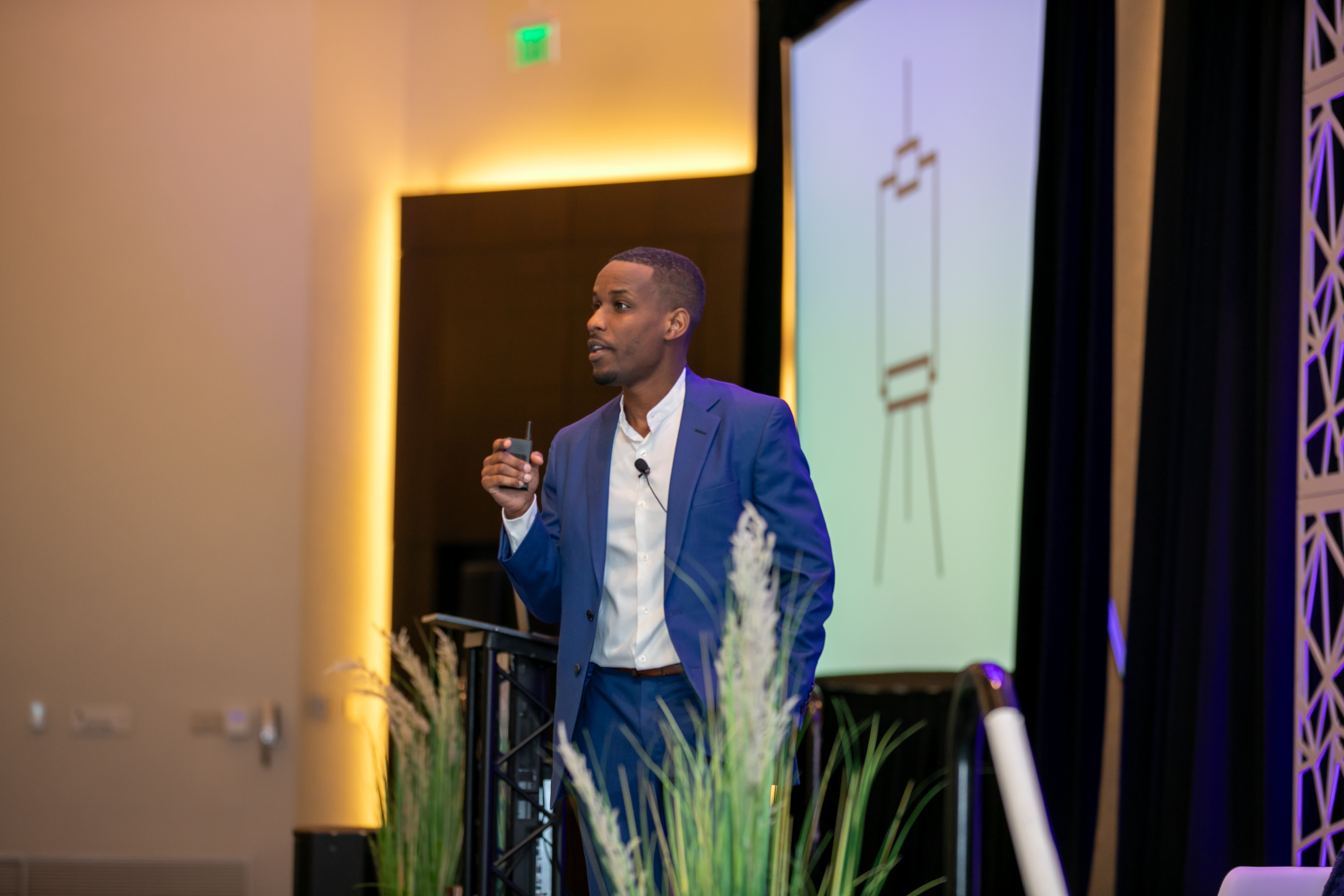
The firm sees what organizations cannot see about themselves.
I built Lee Malveaux around one conviction: the gap between what organizations are capable of and what they actually produce is almost always a human alignment problem.
A career at the intersection of organizational psychology, strategic execution, and executive leadership, working with leaders at Capital One, Amazon, Target, Chase, and one of the largest healthcare systems in America. The firm honors my grandmother Margaret, whose people-first leadership is the reason it exists.